
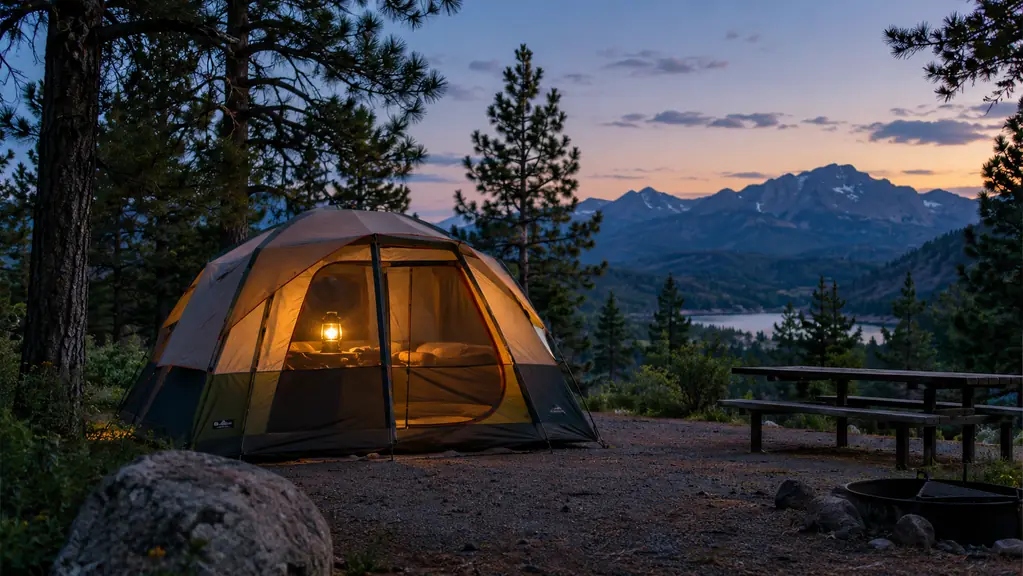
Every summer for the last twelve years, my wife Jenna and I have loaded five kids into our Ford Expedition, strapped the rooftop cargo box on top, and driven to a state park somewhere in Utah, Idaho, or Wyoming. And for most of those years, the first night in the tent went the same way: the youngest two were asleep by nine, the 12-year-old was tossing by ten, and by midnight somebody was awake complaining that the ground was digging into their hip. The tent was fine. The sleeping bags were fine. The ground underneath was not.
The fix was not a fancier tent or a thicker sleeping bag. It was getting the kids off the tent floor entirely. A good sleeping pad is the difference between a kid who wakes up at 6 a.m. ready to fish and a kid who wakes up at 6 a.m. sore, cranky, and done with camping. This guide is the system we use now, built around the Elegear double sleeping pad, which solved more of our family's sleep problems than any other single piece of gear we own.
The pad that ended midnight complaints in our tent
The Elegear double sleeping pad gives two kids a 5.5-inch thick, full-size sleeping surface that stays put all night. It is the first pad we have owned that the kids fight over instead of avoid.
Amazon Check Today's Price on Amazon →Step 1: Pick a pad thick enough that the ground stops existing
Here is the mistake I made for years: I bought pads that were technically pads, but they were barely an inch thick. The first ones were closed-cell foam mats from the big-box store, the kind that roll up like a yoga mat. They folded up small, they were cheap, and they did nothing. By the second trip, two of them had permanent dents where the kids' hips sat, and the 12-year-old refused to sleep on hers at all. A kid sleeping on a one-inch pad might as well be sleeping on the tent floor with a blanket under them. The cold comes up, the roots come through, and the kid is awake by midnight.
The Elegear pad is 5.5 inches thick when inflated. That is not a typo. It is thick enough that a 78-pound kid can flop onto it and the ground underneath simply does not register. Our youngest, who is four, sleeps on it like it is her bed at home. The first morning after we switched, she asked why the tent floor was so soft now. That is the whole goal. The trip that sold me was a three-night stay at a state park in northern Utah last September. The campsite sat on a slight slope, and under the tent there was a root system I had not fully cleared. On the old foam mats, that site would have meant two or three midnight wake-ups and a kid sleeping in the car by night two. Instead, all five kids slept through all three nights. I stood outside the tent at 6:30 a.m. in the fog, waiting for the first complaint, and there was none.
Thickness also matters for insulation. The pad is full of air, and that air is what separates the kid from the cold ground. On a 40-degree night in the Uinta mountains, the kids on the Elegear pad slept through without a single complaint about being cold. The kids on the old thin pads were wearing hoodies to bed by the second night.
Step 2: Give each kid a full-size sleep surface, not a mummy sliver
The second mistake I made was buying pads sized for adults and assuming they would work for kids. They did not. A standard camp pad is about 20 inches wide. That is fine for a grown man who sleeps on his back. It is not fine for a 9-year-old who rolls, sprawls, and ends up perpendicular to the tent by morning. Our middle kid did that every night for one whole trip, and by the last night he was sleeping on the tent floor on purpose because at least it was flat. The kid rolls off the pad, hits the cold floor, wakes up, and the whole tent is awake.
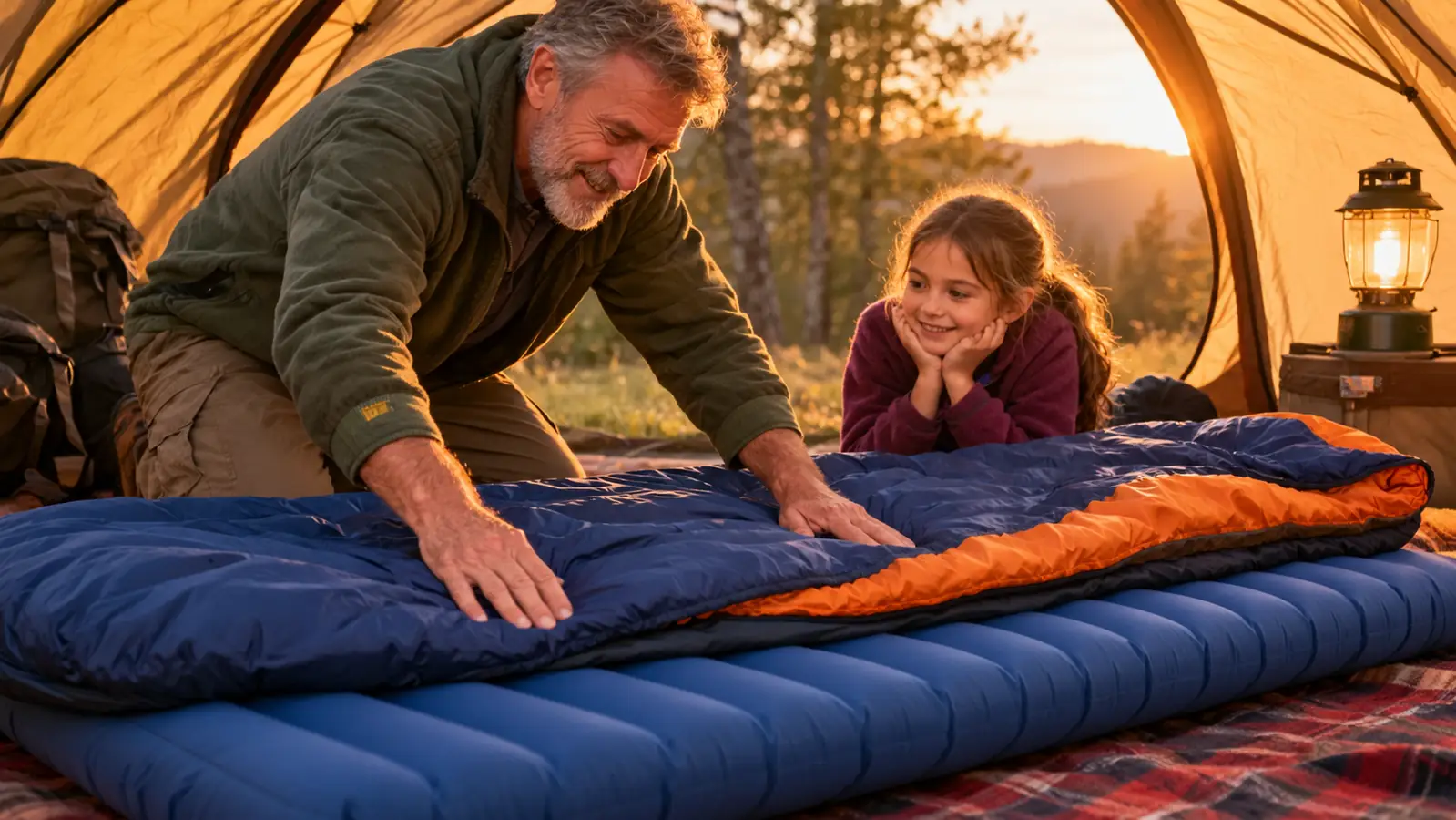
The Elegear is a double pad, which means it is roughly the size of a full mattress. In our tent, we lay it out and two of the younger kids share it side by side. Each kid gets a surface wider than a standard twin bed. There is no rolling off. There is no fighting for the middle. There is just a big, flat, forgiving surface that stays where you put it. Before this pad, we tried giving each kid their own single inflatable pad. That solved the thickness problem but created a new one: the pads slid apart during the night, and a 6-year-old would end up in the gap between two pads with one leg on each. The double pad fixed both problems at once, because there is no gap to fall into.
For the teenagers, we use two of these pads side by side and it turns the tent floor into what is basically a family-size mattress. The 15-year-old, who is already taller than Jenna, sleeps diagonally across his half and still has room. The first trip we did this, I woke up at 6 a.m. to find all three of the younger kids asleep in a pile on one pad, having migrated there in the night because it was the most comfortable spot in the tent.
Step 3: Inflate it right, and let the kids help
The Elegear pad comes with a pump, and this is where I have to be honest: I was skeptical. The first pad we owned with a built-in pump took eleven minutes to fill a much smaller pad and ate four AA batteries doing it. I timed it once out of boredom. So when the Elegear arrived, I inflated it in the living room before the first trip, expecting the same slow whine. It was done before I finished reading the instructions. Most built-in pumps are weak, slow, or both. This one is not. It inflates the pad in a couple of minutes, which matters when you have five kids standing in the tent holding sleeping bags and asking when dinner is ready.
The other thing I learned is to let the kids do the inflating. It sounds like a small thing, but it changes the whole rhythm of camp setup. The 12-year-old runs the pump, the 9-year-old holds the valve, and the pad is ready before I have the sleeping bags unrolled. The first time we tried it, I was sure the 9-year-old would lose the valve cap in the grass. She did not, and she has done it on every trip since. The kids feel like they built their own beds, and for whatever reason, they are more likely to actually stay in them.
One practical note: inflate the pad inside the tent, not outside. We learned that at a campground in Wyoming where the wind comes up the valley every evening around six. We laid the pad on the picnic table, started the pump, and by the time it was half full the wind had wrapped it around the table leg. It took Jenna and me ten minutes to wrestle it free. Inside the tent, it stays put, and you can position it exactly where you want it before you finish inflating.
Step 4: Layer the sleep system, not just the pad
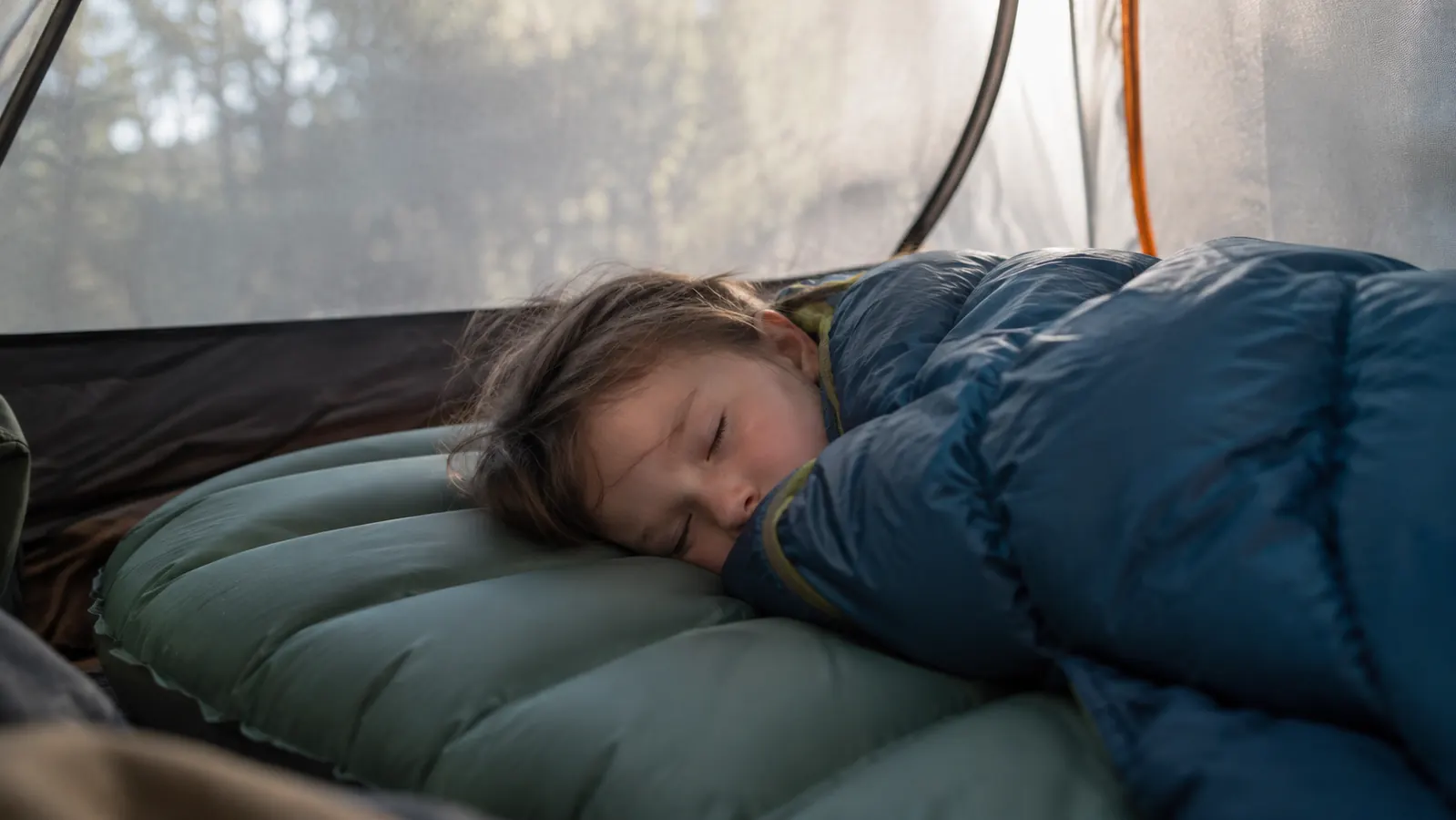
A pad is the foundation, but it is not the whole system. Here is the layering order that works for us, from the ground up: tent footprint, tent floor, Elegear pad, a fitted sheet over the pad, then sleeping bags. The fitted sheet is the trick. It keeps the sleeping bags from sliding off the pad, it keeps the pad clean, and it makes the whole thing feel like a bed instead of a camping pad. On a cold night in the Uintas, when the temperature dropped to 38 degrees, the kids on this layering system slept in short sleeves. The ground was cold enough that the picnic table had frost on it by morning, and they did not notice.
We bring one fitted sheet per pad, and they take up almost no room in the cargo box. At home, they are the sheets from the kids' old beds that we retired. On the trip, they are the difference between a kid who sleeps on a pad and a kid who sleeps in a bed that happens to be in a tent.
Pillows matter more than you think. We tried the inflatable camp pillows and the kids hated them. They slid around, they crinkled every time a kid turned over, and they were flat by 2 a.m. Now we bring regular pillows from home, one per kid, and stuff them into the cargo box. They take up space, but a kid with a real pillow sleeps an hour longer in the morning. I have tested this theory across five kids and twelve summers. It holds.
Step 5: Set the bedtime routine before the sun goes down
The gear matters, but the routine matters just as much. We learned this the hard way. The first few years, we let the kids run around the campground until dark, then tried to put them straight into sleeping bags. It was a disaster. One night in Idaho, the 9-year-old was still awake at 11 p.m. asking if the tent zipper worked from the inside, which is when I knew we needed a plan. Flashlights, giggles, whispered arguments, and at least one kid asking for water every ten minutes.
Now we start winding down about 45 minutes before sunset. The kids change into pajamas, brush teeth at the camp bathroom, and get into their sleeping bags while there is still light. Jenna reads to the younger two, the teenagers listen to music on their own devices, and the tent goes quiet on its own. The night this routine finally clicked was during our annual road trip two summers ago, at a campground in Idaho with a creek behind the sites. The 12-year-old, always the hardest to settle, was asleep before the sky went dark. By the time it is actually dark, the kids are already asleep.
The pad makes this routine possible. When the kids are comfortable, they do not fight the routine. When they are lying on a hard, cold, narrow pad, they find reasons to be awake. The Elegear pad removed the physical reason to resist sleep, and the routine did the rest.
What Else Helps
A few smaller things that made a real difference for us. First, bring a small LED lantern and hang it from the tent ceiling. Kids sleep better with a dim light they can see, and it stops the 3 a.m. 'where am I' panic. Second, put a thin blanket under the pad if you are camping on a surface that might have sharp rocks or sticks. We have never punctured the Elegear pad, but we also do not test it. Third, keep the pump and the repair kit in the cargo box, not buried in the tent bag. The one time we needed the repair kit, we needed it at 11 p.m. in the rain, and we had to dig through three bags to find it. Fourth, if you have a kid who sleeps cold, add a cheap fleece blanket between the fitted sheet and the sleeping bag. It adds warmth without adding bulk.
The first morning after we switched to the Elegear pad, our four-year-old asked why the tent floor was so soft now. That is the whole goal.
Give your kids a real bed in the tent this summer
The Elegear double sleeping pad is the single upgrade that changed camping for our family of seven. Two kids can share one pad, or one teenager can sprawl across it. Either way, everyone sleeps better.
Amazon Check Today's Price on Amazon →