

After twelve summers of camping with five kids, I have strong opinions about what goes in the Ford Expedition and what stays home. For years we dragged along a queen air mattress because it felt like the closest thing to a real bed. Last season I swapped it for the Elegear 5.5 inch Thick Double Sleeping Pad, and it changed how I pack and how the kids sleep. If you are trying to decide between the two for a big family, here is the short answer: the Elegear pad is the better camping investment for most trips, but the air mattress still wins a few honest categories.
Why? The Elegear pad holds its shape all night, stays warmer on cold canyon nights, and rolls down to a fraction of the trunk space. The air mattress is cheaper, inflates with the push of a button, and gives you a wider, more familiar sleeping surface. Neither is perfect. But for a family that sleeps five across a tent floor, the Elegear has been the more reliable bed, and I will show you exactly where each one earns its place.
| Elegear Double Sleeping Pad | Queen Air Mattress | |
|---|---|---|
| Sleep stability | 5.5 inches of foam support, no sag even when the 12-year-old rolls over | Surface sags and sinks by morning, especially in the middle |
| Setup | Takes a few minutes with a hand pump, then holds air for the night | Built-in electric pump inflates it fast, just needs 12V power |
| Price | Mid-range for a thick camping pad, built to last years | Usually the cheaper way to get a queen size bed in a tent |
| Insulation | Thick walls keep ground cold from coming through | Thin vinyl transfers cold from the tent floor |
| Packed size | Rolls into a compact bundle that fits in a duffel | Folds into a heavy, awkward rectangle that eats trunk space |
| Durability | Rugged outer fabric handles rocky tent pads and kid tossing | Vinyl seams and thin walls puncture more easily on rough ground |
| Best for | Camping trips where kids toss, turn, and sleep on the floor | Home guests who want a familiar bed feel for a night or two |
The Real World Differences
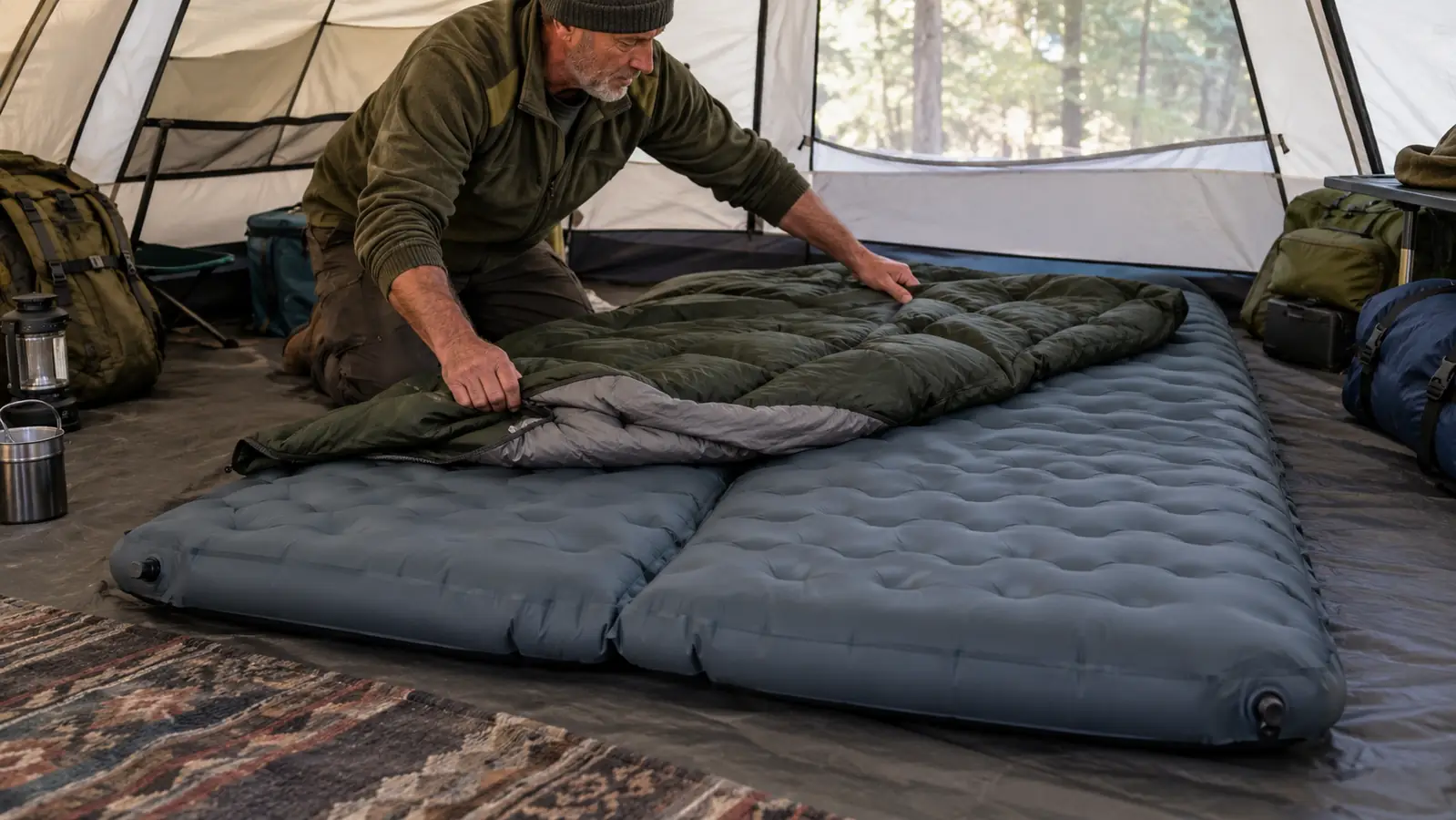
Here is what the spec sheets do not tell you. An air mattress feels firm when you first inflate it, but the air shifts as soon as someone moves. If the 12-year-old sits up in the middle of the night, the whole bed ripples. The Elegear pad holds its shape better, so a 4-year-old climbing over me at 6 AM does not wake the person on the other side. For parents who are used to being woken up by every kid toss, that is a real difference.
The surface matters too. An air mattress has a vinyl top that crinkles with every move and feels cold to the touch. The Elegear pad is quieter and does not have that cold plastic feel. The kids stopped complaining about the noise, and I stopped hearing the crinkle from across the tent. It sounds like a small thing, but at 2 AM it matters.
Let me give you a specific night. Our first trip with the Elegear pad was to a state park in Idaho, and the temperature dropped to the mid-40s by midnight. On the air mattress the summer before, a night like that meant somebody was up at 3 AM asking for an extra blanket. With the Elegear pad, nobody stirred until the sun hit the tent wall. That was the moment I stopped second-guessing the switch.
What About the Kids?
With five kids, the real test of any sleeping setup is whether anyone ends up on the tent floor by morning. On the air mattress, that happened almost every trip. The kids would slide off the edges or roll into the middle and wake up cold. The Elegear pad has a wider footprint and a flatter surface, so the younger ones stayed put. Our 4-year-old still managed to roll off once, but that was because he sleeps like a tornado, not because the bed gave way.
The teenagers were the biggest surprise. They complained the first night we switched, because the pad is not as soft as the air mattress. By the third night, they stopped asking for the air mattress back. The firmer surface actually helped them sleep, and they stopped waking up with sore backs. That was enough to convince me.
The first real test was a four-night stretch at a Wyoming campground where we pitched on a slightly sloped spot. The air mattress would have slid on that slope, and by night two it would have been a disaster. The Elegear pad gripped the tent floor well enough that even with three kids sprawled across it, nothing moved. I checked on the 12-year-old at 1 AM expecting to find him on the ground, and he was dead center, flat on his back, still on the pad.
Where Elegear Wins
The biggest difference I noticed was how the kids slept. With the air mattress, the two teenagers ended up in the dip in the middle by 2 AM, and the youngest rolled off at least once a night. The Elegear pad is thick enough that it does not turn into a hammock. At 5.5 inches, it gives enough cushion that our 15-year-old, who is almost my size, can sleep on his side without his shoulder going numb. Three of the smaller kids can sleep side by side without one of them rolling into a gap.
The other win is cold weather. Utah and Wyoming nights drop into the 40s even in July. An air mattress sits on the tent floor and pulls heat right out of you. The Elegear pad does not do that. We slept in shorts and a light blanket on a night that had frost on the picnic table by morning. I have also used it on a few shoulder-season trips in early June and late September, and it made the difference between a good night and a shivering one.
One morning in late September at a campground outside Logan, the thermometer on the picnic table read 29 degrees at 7 AM. We had slept in shorts and a light blanket on the Elegear pad, and I woke up warm enough that I checked the thermometer twice. The kids were still on air mattresses that night because we were easing into the switch, and the bottoms of those mattresses were ice cold to the touch. That was the morning the teenagers asked me to pack their air mattress home.
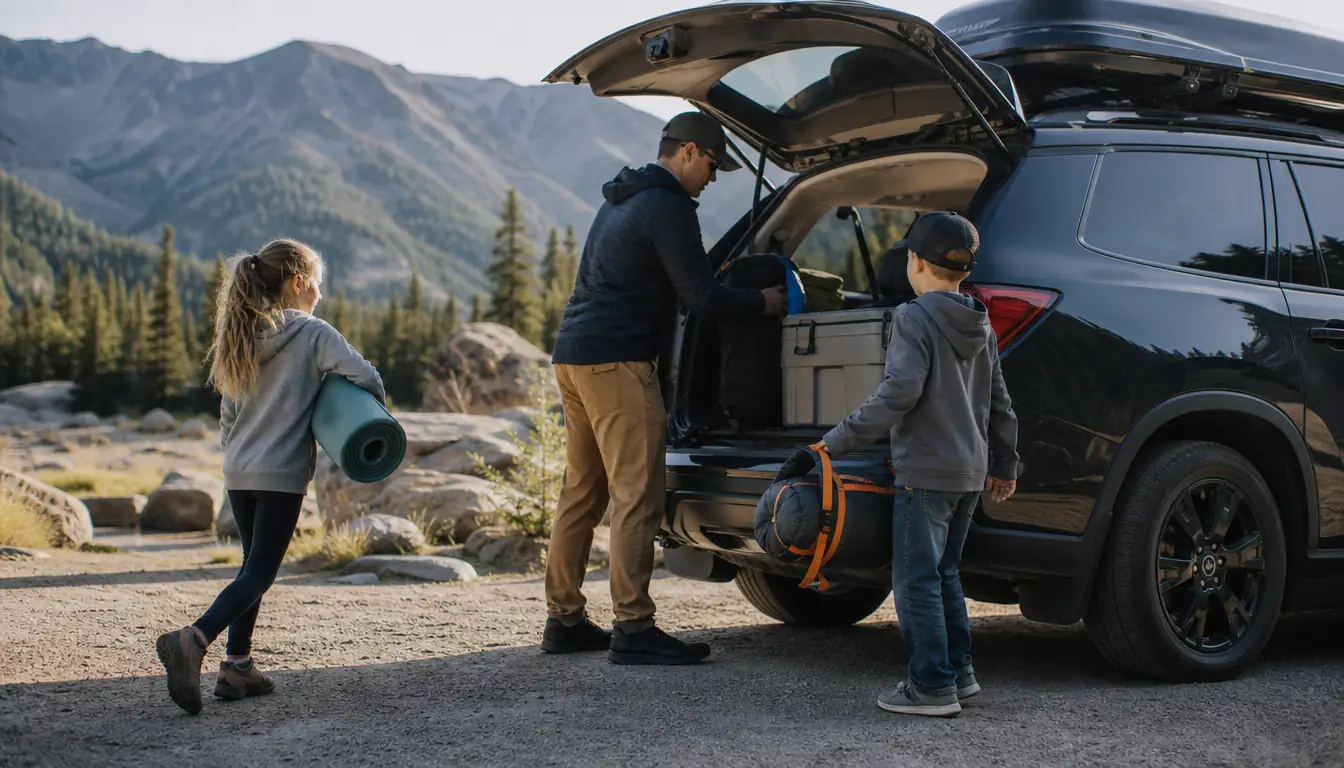
Packing is where the Elegear pad really earns its keep. It rolls into a bundle about the size of a sleeping bag, and it slides behind the third row of the Expedition without a fight. The air mattress folded into a rectangle that had to sit flat on top of the cooler, which meant everything shifted on the first bump. For a family that packs for five kids, saving that much trunk space is worth a lot.
Where the Air Mattress Wins
I am not going to pretend the air mattress has nothing going for it. It wins on price, plain and simple. If you are on a tight budget and need a queen size bed for one trip, the air mattress gets you there for less money. It also sets up faster. The built-in pump means you plug it into the car or a portable battery and it is full in two or three minutes. With five kids waiting to jump on it, that speed matters.
It also gives you a wider surface. The Elegear pad is a double, which fits two adults or three small kids in a pinch. A queen air mattress gives you more room to spread out. For a couple who wants to sleep like they do at home, or for the occasional guest who is used to a soft bed, the air mattress is the more comfortable choice. The tradeoff is that it sags, it leaks air over a week, and it eats trunk space like nobody's business.
The air mattress also works better for certain setups. If you are glamping with a big tent and a cot frame, or if you have a trailer with a flat surface, the wider queen size can feel more like a real bed. And if someone in your family has a bad back and needs a softer, more forgiving surface, the air mattress may be the more comfortable choice. Those are real advantages, and they are the reason I would not throw our air mattress in the trash. It just does not earn a spot in the Expedition for every trip.
The Honest Tradeoffs
Here is the honest version. Neither option is perfect. The Elegear pad is not as wide as a queen, so if you and your spouse are both big people, you will be closer than you are used to. It also takes a little more effort to inflate, and if you lose the pump or the valve, you are stuck. The air mattress has the opposite problem: it is easy to inflate but hard to keep inflated. Over a week-long trip, I had to add air to the queen mattress every other night, and by the end of the week the middle had a permanent sag.
The other thing to consider is what happens when a seam fails. A puncture in an air mattress usually means the bed is done for the night. With the Elegear pad, a small leak is easier to patch, and because it is built in sections, a problem in one area does not flatten the whole thing. I have not had a leak in the Elegear pad yet, but I have had two air mattresses die on us over the years, one on a trip in Idaho with no spare bed.
The air mattress that died in Idaho was a queen we had used maybe six times. It developed a slow leak along the seam on the second night, and by 3 AM the middle was flat enough that our youngest was sleeping on the tent floor. I spent the next morning with a patch kit and a bottle of soapy water, hunting for the hole in daylight. We made it through the rest of that trip by adding air every evening, but that was the last trip that mattress ever took.
There is also the question of what you already own. If you have a good air mattress and a battery pump, the upgrade to a sleeping pad is not urgent. Buy the Elegear pad when the air mattress starts leaking, or when you are planning a trip where cold nights and limited trunk space will matter. For us, the tipping point was the Wyoming trip where we had to choose between the air mattress and the kids' duffels. The pad made that choice easy.
The pad that held up for our whole season
If you want a camping bed that does not sag, stays warm on cold nights, and packs small enough to leave room for five kids' gear, the Elegear Double Sleeping Pad is the one we reach for. It has its limits, but for family car camping it beat the air mattress on every trip we took.
Amazon Check Today's Price on Amazon →Who Should Buy Which
So who should buy the Elegear Double Sleeping Pad? If you are car camping with kids, sleeping in cold mountain nights, or tired of waking up in the middle of the mattress, this pad is worth the money. It suits families who pack a lot of gear and need to save trunk space. It suits people who camp more than a few weekends a year, because it holds up better over time. It also suits side sleepers, restless sleepers, and anyone who has ever spent a night sliding into the sag of an air mattress.
Who should buy the air mattress instead? If you need a cheap bed for a single trip, if you want a wider queen surface, or if you are setting up a guest bed in the house and do not care about packed size, stick with the air mattress. It is also the better pick if you have an electric hookup or a battery pump and you value a two-minute setup over everything else. For our family, the Elegear is the one that stays in the Expedition all summer. The air mattress lives in the garage for the rare weekend we need an extra bed at home.
If you are still on the fence, think about your next trip. If it is a single night in a warm field and you already own an air mattress, use it. If it is a week in the mountains with the whole crew, the Elegear pad will earn its spot.
Make the switch before your next trip
The Elegear Double Sleeping Pad is the one that earned a permanent spot in our camping gear. If you want a bed that sleeps the kids without sag and packs without a fight, check today's price on Amazon.
Amazon Check Today's Price on Amazon →