
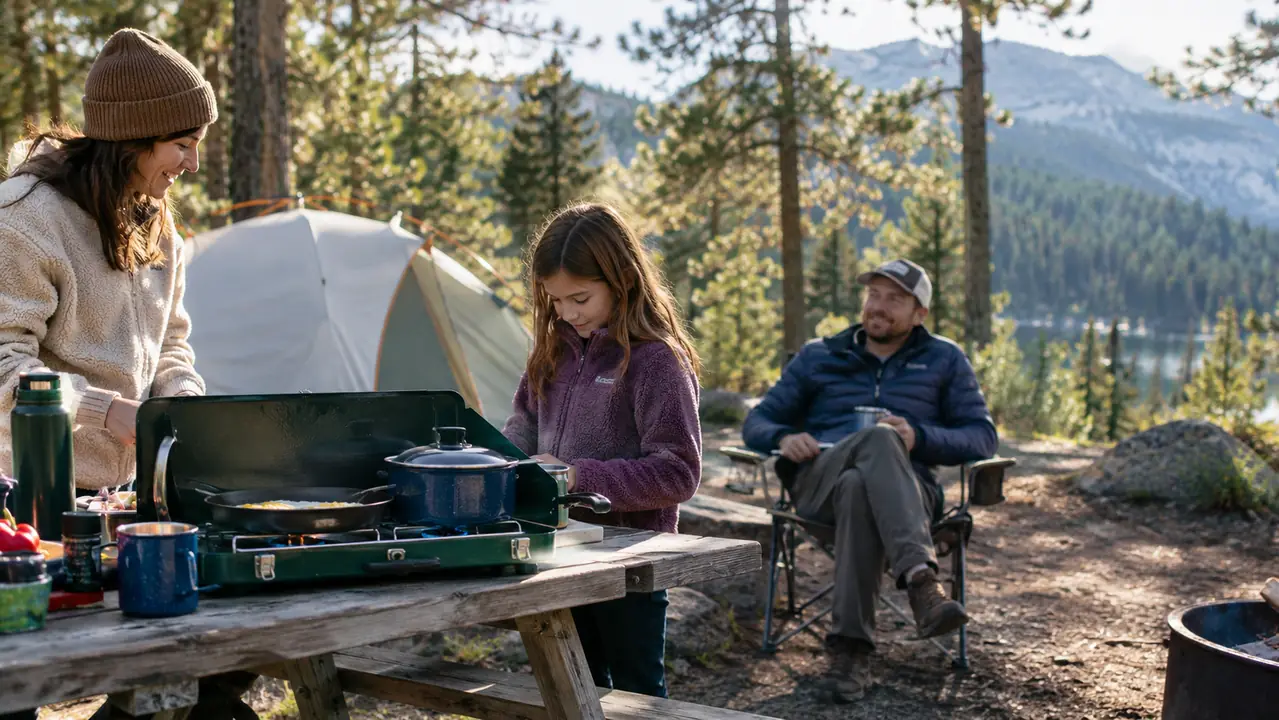
When you camp with five kids, the stove stops being a piece of gear and starts being the difference between a hot dinner and a hangry meltdown at the picnic table. I have been that dad, juggling a skillet while three kids ask when food is ready, and I have learned to care a lot about BTUs. For the last few summers, our family has cooked on both the Camp Chef Explorer 2-Burner Outdoor Camping Stove and the Coleman Triton 2-Burner Stove, and they solve the same problem in very different ways. One is a workhorse that takes up a third of the trunk. The other is a lightweight that fits in a tote bag. Both have their place, but for a family our size, the choice is clearer than you might think.
If you need raw heat and a cooking surface that can handle a big pot of chili and a griddle at the same time, the Camp Chef Explorer is the one that feeds a family of seven without breaking a sweat. If you want something light enough to carry one-handed and quick to set up at a roadside stop, the Coleman Triton is the better travel companion. For our usual week-long trips in Utah and Idaho, the Explorer earns its space in the back of the Expedition. For quick overnights, the Triton is what I grab. Here is how they stack up after a few summers of real use.
| Camp Chef Explorer | Coleman Triton | |
|---|---|---|
| Total heat | 60,000 BTUs across two burners | 22,000 BTUs across two burners |
| Cooking space | Room for a 12-inch skillet and a stockpot at the same time | Fits one large pan or a pan and a small kettle |
| Weight and portability | Heavy and boxy, needs real trunk space | Light enough to carry one-handed, fits in a tote bag |
| Setup time | Folding legs and a regulator that take a minute or two | Open the lid, screw in the regulator, done |
| Wind resistance | Open burners can flicker in a breeze | Built-in windshields keep flames steady |
| Best for | Big family meals, long trips, feeding a crowd | Quick breakfasts, small sites, packing light |
Here is the short version: the Explorer is the stove you buy when you want to cook real meals for a real crowd. The Triton is the stove you buy when you want to keep things simple. For our family, the Explorer is the primary and the Triton is the spare. That arrangement has served us well for three summers.
Where Camp Chef Explorer Wins
The Explorer is a workhorse. With 60,000 total BTUs across two burners, it boils a big pot of water faster than anything else we have used, which is not a small thing when you have five kids waiting on pasta. When we camp with another family, which happens most summers, I can run a 12-inch skillet and a stockpot at the same time and still have room to warm a pan of rolls. The Triton can cook a meal, but it cooks at a smaller scale. On the Explorer, dinner for nine people is just dinner, not a relay race where the eggs have to come off before the bacon goes on.
The other thing I appreciate is the build. The Camp Chef Explorer has a solid frame, folding legs, and a regulator that feels like it belongs on a backyard grill, not a camp stove. We have knocked it around in the back of the Ford Expedition for three years, and it still lights on the first click. The cooking surface is wide enough that a griddle sits flat, which matters when you are making forty pancakes on a Saturday morning. That is the real test of a family camp stove, and the Explorer passes it every time. It is not the prettiest piece of gear we own, but it is the one I trust to get dinner done.

Where Coleman Triton Wins
The Triton wins the moments when you do not want to haul a small appliance. It is light, compact, and fits in a tote bag with the rest of the kitchen gear. On overnight trips or quick stops at a state park, I grab the Triton and leave the Explorer at home. It sets up in about a minute: open the lid, screw in the regulator, turn the dial. The built-in windshields also do a better job in a breeze, which matters at exposed campsites in Wyoming where the wind seems to find every open flame. For a quick lunch stop, the Triton is the stove that gets the job done without making me reorganize the whole car.
The Triton also wins on price, and I am not going to pretend that does not matter for a family that already owns more camping gear than trunk space. It is the stove I would buy for a first-time camper or for a family that mostly does short trips. The tradeoff is heat. At 22,000 total BTUs, it takes longer to boil water and it struggles if you try to run two big pans at once. For our big family meals, that tradeoff is too steep. For a smaller family or a couple, it is probably the smarter buy. I still own one, because sometimes the smart buy is the one that fits in the car.
The stove that keeps up with five hungry kids
The Camp Chef Explorer has the heat and cooking surface to make dinner for a big family feel easy. Check today's price on Amazon and see if it fits your campsite.
Amazon Check Today's Price on Amazon →How These Two Stoves Fit Into a Family Trip
I have used both on the same trips, which is probably not the minimalist way to camp, but it works. The Explorer lives in the rooftop cargo box for the long summer road trip, and the Triton rides behind the back seat for quick stops. When we pull into a campground after a long drive, the Explorer is the first thing out, because the kids need food and they need it soon. The Triton comes out for lunch stops or when we are just making coffee and oatmeal. Having both means I never have to choose between cooking power and packability. I just have to remember which one is where.
The real difference shows up in the cooking. With the Explorer, I can brown a pound of sausage, start a pot of water for pasta, and keep a pan of vegetables going without thinking about space. With the Triton, I have to pick one thing at a time. That is fine for eggs and toast. It is not fine when the teenagers are asking for seconds before the little ones have even sat down. The Explorer handles the chaos of a big family meal. The Triton handles the calm moments, like a quiet morning when the kids are still asleep and I just want coffee and a pan of scrambled eggs.
What the Kids Taught Me About Camp Stoves
The kids do not care about BTUs or regulator quality. They care about whether dinner is ready when they are hungry. That has taught me to value speed and surface area more than I used to. A stove that takes twenty minutes to boil water is a stove that produces a lot of complaining. The Explorer gets the water boiling while the kids are still setting up the tent, and by the time they are done, dinner is close. The Triton is slower, and the kids notice. They do not say anything, but they hover, and hovering is its own kind of review.
The other thing the kids taught me is that the stove needs to be out of the way when it is not in use. The Explorer is big and boxy, and it takes up a corner of the campsite. The Triton folds up small and disappears. On a short trip, that matters. On a long trip, we are spread out enough that the Explorer's footprint does not bother anyone. If I were camping with just my wife, I would probably pick the Triton. With five kids, the Explorer is the one that keeps everyone fed and happy.
The Explorer boils a big pot of water faster than anything else we have used. That is the real test of a family camp stove.
The One Thing That Surprised Me
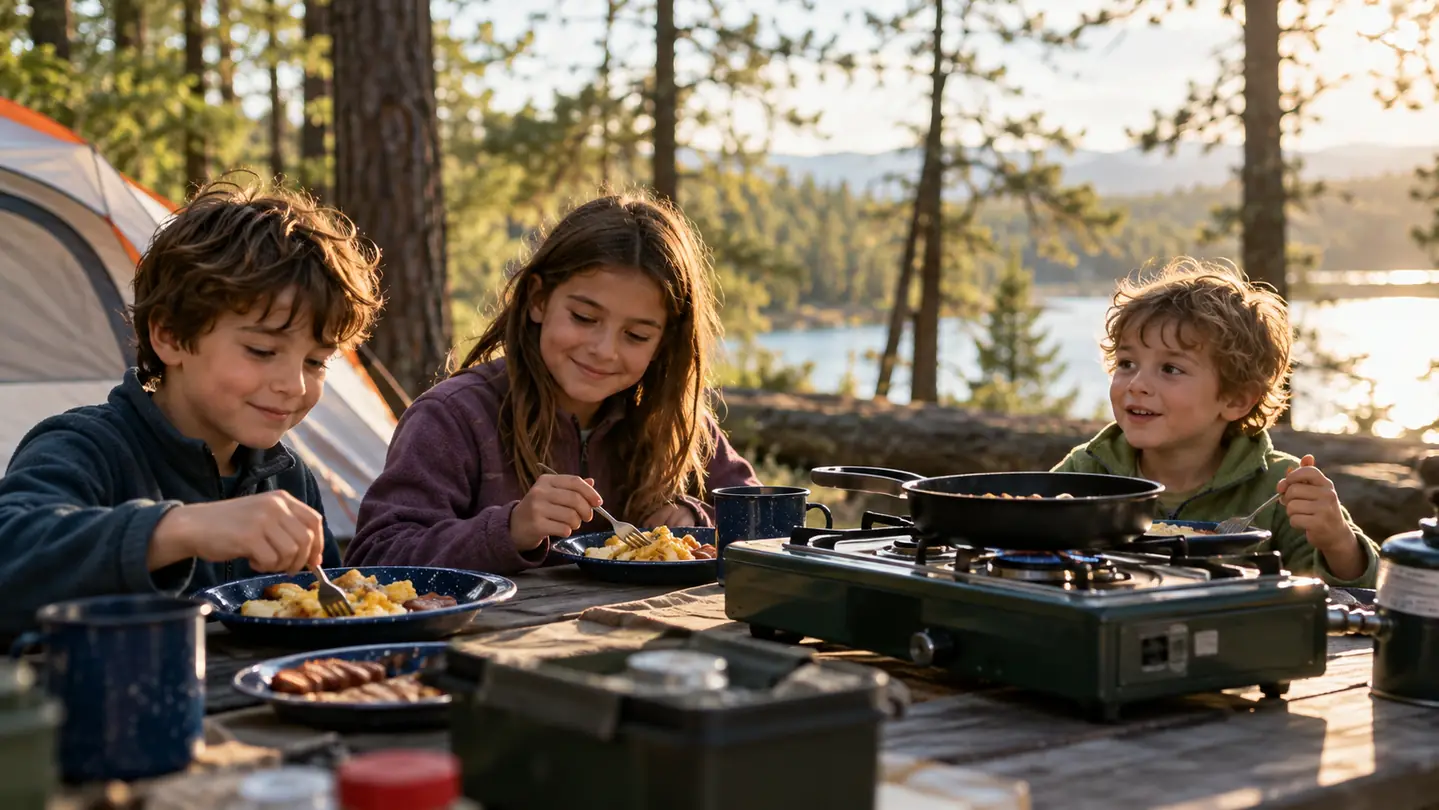
The thing that surprised me most about the Explorer is how well it simmers. I expected a stove with 60,000 BTUs to be all flame and no finesse, but the dials let me turn it down to a low, steady bubble for a pot of beans or a simmering sauce. The Triton has decent control too, but the Explorer's larger knobs and regulator make it easier to find that sweet spot. That matters when you are cooking for kids who like their food hot but not burned, and it is the kind of detail you do not appreciate until you have ruined a batch of rice on a stove that only knows one temperature.
The other surprise is how much the Explorer feels like a real stove. It is not a camping compromise. It is a two-burner range that happens to fold up. That is why it is the one we reach for on the long summer road trip. The Triton is a great camp stove, but it always feels like a camp stove. The Explorer feels like the kitchen from home, which is exactly what you want after a day of hiking with five kids. And because the Explorer runs on a standard propane tank, I never have to hunt for the little green canisters at the last minute. That alone saves me a trip to the gas station on the way to the mountains.
The Bottom Line
After three summers of using both, I can tell you the Explorer is not the right stove for everyone. It is heavy, it is bulky, and it is more stove than a couple needs for a weekend. But for a family that camps the way we do, with five kids and a long road trip every summer, it is the difference between cooking dinner and fighting about dinner. The Triton is a fine stove, and it has its place in our setup. It just is not the stove I reach for when everyone is hungry.
Who Should Buy Which
Buy the Camp Chef Explorer if you regularly cook for five or more people, if you like to make real meals at camp, and if you have the trunk space to carry it. Buy the Coleman Triton if your trips are short, your campsites are small, or your cooking is mostly breakfast and hot drinks. Both are good stoves. They just answer different questions. For our family of seven, the Explorer is the answer, and the Triton is the backup that comes along when we want to pack light. If you are still deciding, think about your worst-case meal. If that meal is a big pot of chili for a crowd, get the Explorer. If it is a couple of burgers and a pot of coffee, the Triton will serve you well for years. Either way, you are getting a stove that will outlast the cheap ones you probably started with. One practical note: the Explorer will not fit in a milk crate, so measure your trunk before you buy. It is worth the space, but only if the space is actually there.
Make dinner at camp feel easy
Backed by thousands of reviews and years of family camping, the Camp Chef Explorer is the stove we reach for first. Check today's price on Amazon and see if it belongs in your camp kitchen.
Amazon Check Today's Price on Amazon →