
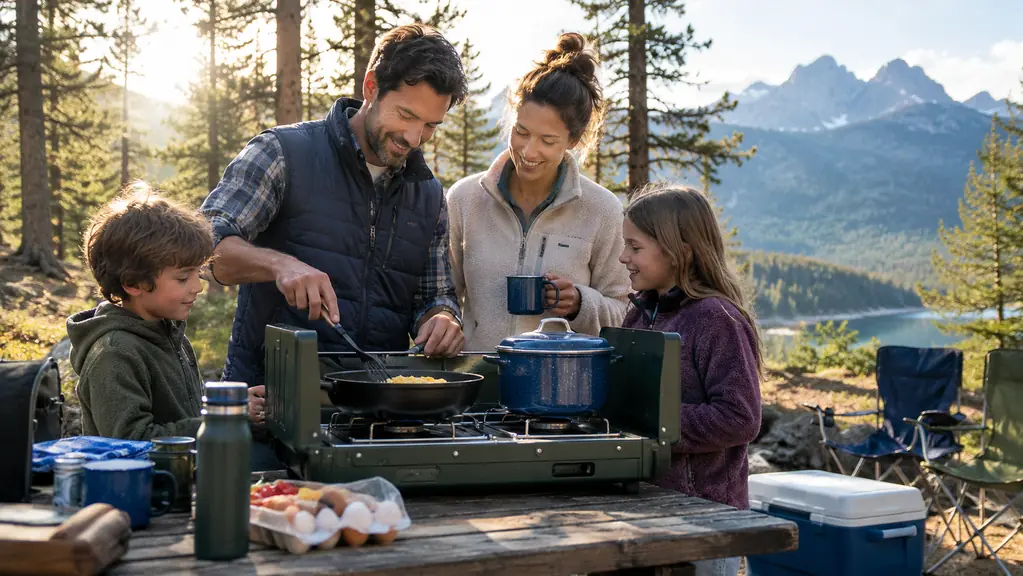
I have fed five kids around a campfire for twelve summers, and I can tell you the exact moment our old two-burner stove became a problem. It was a cold evening at a state park in Idaho, the wind was picking up, and I was trying to boil water for pasta while the teenagers were complaining about being hungry. The water never really boiled. We ate lukewarm spaghetti in the dark, and I spent the next morning looking at camp stoves online. That is how the Camp Chef Explorer ended up in the back of our Ford Expedition.
Now, after a full season of trips, including one long road trip through Wyoming and Utah, I have a pretty clear picture of what this stove does well and where it falls short. This review is that picture, written for other parents who are tired of cold dinners and are wondering if a bigger stove is worth the trunk space. Short answer: for us, it absolutely was.
The Quick Verdict
The Camp Chef Explorer is the stove that finally ended cold dinners for our family of seven. It is heavy, it is not shielded from wind, and it takes up real space in the car, but it cooks like a proper kitchen range and it has survived a full season of abuse without a single complaint.
Amazon Check Today's Price →Tired of lukewarm camp meals? This 60,000 BTU stove fixes that.
The Camp Chef Explorer runs two burners at full blast without losing flame, which means boiling water fast and searing burgers properly at the campsite. See today's price on Amazon before your next trip.
Amazon Check Today's Price on Amazon →How I've Used It
We have used the Camp Chef Explorer on eleven trips since last spring. That includes six weekends in Utah state parks, two long weekends in Wyoming, and a two-week road trip that took us through the Wasatch range and into Idaho. On most of those trips, we were cooking for seven people, and on the road trip we were cooking three meals a day. The stove sat on the picnic table at every campsite, and it came home covered in grease and dust every time.
Most of our cooking is simple: breakfast eggs and bacon, lunch sandwiches, dinner pasta or foil packets or a big pot of chili. The Explorer handles all of it without breaking a sweat. The two burners are big enough that I can run a 12-inch skillet and a 4-quart pot at the same time, which is the difference between dinner at 7 and dinner at 8. On the road trip, we also used it to cook a big pot of oatmeal for seven people, and it did that without scorching the bottom, which is more than I can say for our old stove.
I have also used it for a few things that are not strictly camping, like tailgating at a high school football game and cooking for a Scout troop event. It is heavy, but it has wheels and a handle, so moving it around a parking lot is not too bad. The wheels are small and they do not roll well on gravel, but on pavement and on a picnic table, it is easy to position.
What the Explorer Does Well
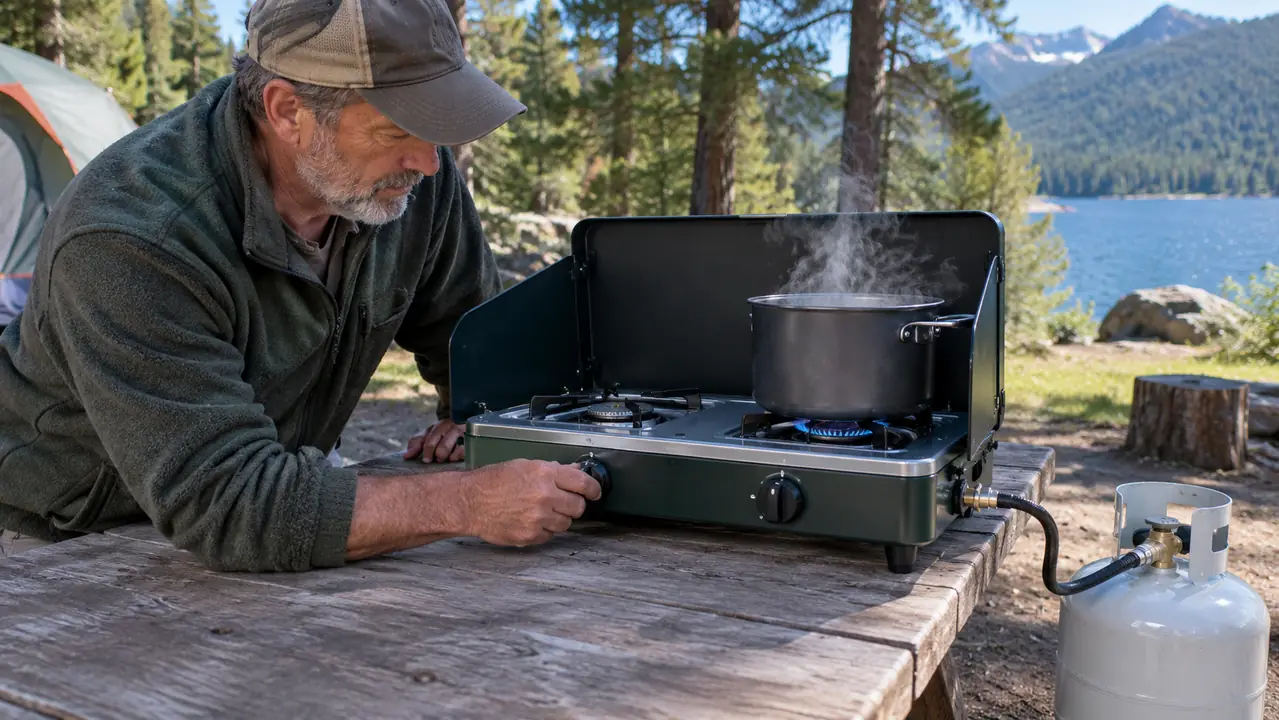
The first thing you notice is the heat. This stove puts out 60,000 total BTUs across two burners, which is roughly double what our old stove managed. That matters when you are cooking for a crowd. A big pot of water for pasta comes to a rolling boil in about eight minutes, and a cast iron skillet gets hot enough to sear burgers without smoking up the whole campsite. The heat is also adjustable, so you can simmer a pot of chili for an hour without scorching it.
The second thing is the cooking surface. The burners are spaced far enough apart that you can use a big pot and a big skillet at the same time without them fighting for space. The grates are sturdy, and they have held up to a lot of abuse, including one incident where a teenager dropped a cast iron skillet directly onto them. No damage. The grates are also easy to remove, which makes cleaning the burners a simple job.
The third thing is the build quality. The Camp Chef Explorer has a welded steel frame and a powder coated finish that has survived rain, wind, and being bounced around in the back of our Expedition. The legs fold up, the lid closes, and the whole thing feels like it will last longer than our Expedition, which is saying something. After a season of use, the only visible wear is a few scratches on the lid and some discoloration on the grates.
What It's Like to Cook for Seven on This Stove
Here is the honest answer: it is still a two-burner stove, and two burners is not a lot when you are cooking for seven. What the Explorer gives you is the ability to run both burners at full blast without worrying about the flame dying or the regulator freezing up. On our old stove, running both burners at high heat for more than a few minutes would cause the flame to flicker and sometimes go out. The Explorer holds a steady flame even on windy evenings, which is the main reason we stopped eating cold dinners.
The other thing that helps is the height. The stove sits at a comfortable cooking height when you put it on a picnic table, so I am not hunched over like I am cooking on the ground. That sounds like a small thing, but when you are standing there for forty-five minutes making breakfast for seven people, it makes a real difference. My back thanks me, and I am less grumpy in the morning.
The biggest adjustment was learning to plan meals around two burners. I usually do the main dish on one burner and the side dish on the other, then move the main dish to a cooler or a warm spot while I finish the side. It is not as convenient as a four-burner stove, but it is a lot better than the single-burner backpacking stove we used to bring as backup. On the road trip, we got into a rhythm: coffee on one burner, eggs on the other, and the bacon done in the skillet before the eggs go in.
The Long Road Trip
The two-week road trip through Wyoming and Utah was the real test. We cooked every single meal on the Camp Chef Explorer, which meant it was fired up at least twice a day for fourteen days. By the end of the trip, I had a much better sense of what this stove can handle. It never failed to light, never lost a flame in the wind, and never left us waiting for a meal. That is the kind of reliability you want when you are a long way from home.
The only issue we ran into on the road trip was the regulator connection working loose after a particularly bumpy stretch of gravel road. It took about two minutes to tighten, and it did not happen again. I also learned to pack the stove so that the hose and regulator were not under any stress, and after that we had zero problems. For a stove that gets bounced around in the back of an Expedition for two weeks, that is a pretty good record.
The Downsides You Should Know
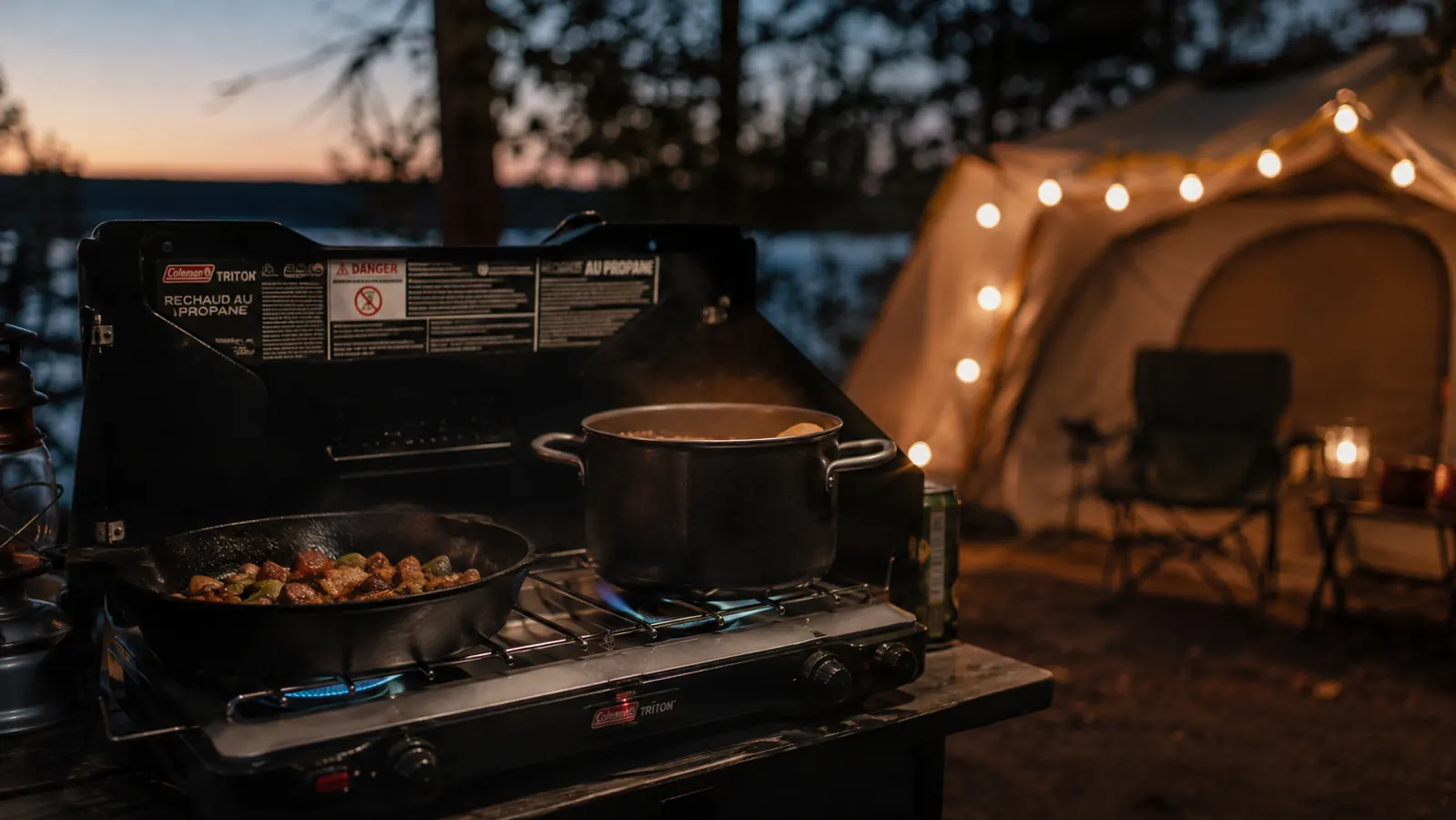
I want to be straight with you about the things that are not great. The first is the weight. The Camp Chef Explorer is not a backpacking stove. It weighs somewhere in the neighborhood of 30 pounds, and even with the wheels and handle, you are not going to carry it far. We keep it in the back of the Expedition and wheel it to the picnic table. If you are planning to hike into a campsite, this is not the stove for you.
The second downside is the wind. The burners are not shielded, and on a really windy day, the flame will flicker and you will lose some heat. We have cooked in wind that would knock over a camping chair, and the stove still worked, but it took longer to boil water. A simple windscreen or a spot behind the car helps a lot. On the road trip, we learned to set up the stove on the lee side of the Expedition, which cut the wind problem down to almost nothing.
The third thing is the regulator and the hose. The stove comes with a regulator that connects to a standard 20-pound propane tank. That is great, but the hose is not the longest, and you need to be careful not to trip over it when you are carrying a pot of hot water. We have had a couple of close calls. We also had one instance where the regulator connection worked loose after a bumpy drive, and we had to tighten it before the stove would light. It took two minutes to fix, but it is worth checking before every trip.
Maintenance and Storage
After a season of use, the Explorer has needed very little maintenance. I wipe down the grates and the drip tray after each trip, and every few months I take the burners out and brush them off with a wire brush. The stove has a grease tray that slides out, which makes cleanup a lot easier than our old stove, where grease would pool in the bottom and harden. The grease tray is a simple metal pan, and I can clean it in the sink at home or just wipe it out at the campsite.
Storage is straightforward. The legs fold, the lid closes, and the whole thing fits in a corner of the garage or in the back of the Expedition. It does not come with a carrying case, which is a small annoyance, but we have been using a heavy duty duffel bag and it has worked fine. If you are going to store it in a garage, I would recommend covering it with a tarp or a bag, because the powder coat will show dust and the grates will collect cobwebs.
What I Liked
- 60,000 BTUs of heat, boils water fast even on a windy evening
- Sturdy steel frame that has survived a full season of abuse
- Two burners spaced far enough apart for a big pot and a big skillet
- Wheels and handle make it easy to move around a campsite
- Grease tray slides out for easy cleanup
Where It Falls Short
- Heavy, around 30 pounds, not for backpacking
- Burners are not shielded from wind
- Hose is shorter than I would like
- No carrying case included
A big pot of water for pasta comes to a rolling boil in about eight minutes, and a cast iron skillet gets hot enough to sear burgers without smoking up the whole campsite.
Who This Is For
This stove is for families who drive to a campsite and want to cook real meals without fighting with a wimpy stove. If you are feeding four or more people, if you are tired of lukewarm pasta, and if you have a vehicle that can carry a 30-pound stove, the Camp Chef Explorer is going to make your trips better. It is also a great choice for tailgating, Scout troops, and anyone who cooks for a crowd on a regular basis. The high BTU output and the sturdy build make it a workhorse, not a toy.
In our case, the Explorer replaced a smaller two-burner stove that we had been using for years. The difference was immediate. We stopped eating cold dinners, we stopped waiting forever for water to boil, and we started cooking bigger meals that actually fed everyone. If you are on the fence about whether a bigger stove is worth it, think about how many meals you have eaten that were not quite hot enough. That number is the reason we bought this stove.
Who Should Skip It
If you are a backpacker, a solo camper, or someone who only cooks freeze dried meals, this is way more stove than you need. The weight alone rules it out for anything that involves hiking. It is also not the best choice if you only camp once or twice a year and you are happy with a smaller stove. For those situations, a lighter two-burner stove or even a single burner will do the job and take up a lot less space.
There is also the price to consider. The Camp Chef Explorer is not the cheapest stove on the market, and if you are only going to use it a handful of times, the cost per use is hard to justify. But if you camp regularly, or if you cook for a crowd, the price starts to look very reasonable compared to the cost of eating out on every trip. I would rather own one good stove that lasts for a decade than replace a cheap one every two years.
The stove that ended cold dinners for our family
If you are tired of fighting with a weak camp stove, the Camp Chef Explorer is worth a serious look. Check today's price on Amazon and see if it fits your camping setup.
Amazon Check Today's Price on Amazon →