
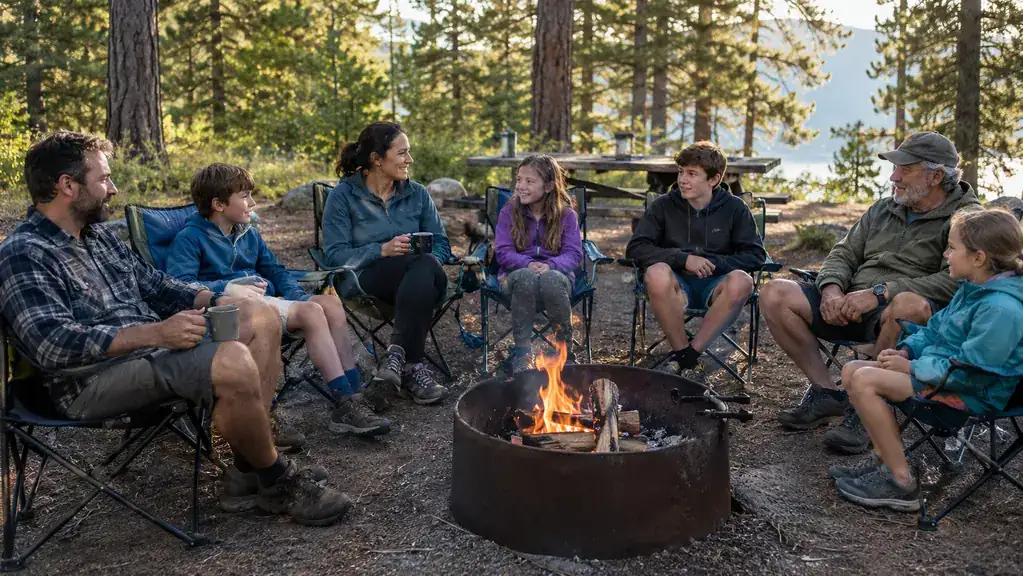
The first year we took all five kids camping, I packed four different kinds of chairs and still got it wrong. I had a stiff folding stool for myself, a couple of cheap nylon slings for the older kids, and nothing at all that the 4-year-old could sit in without tipping sideways. By the second night, two of the kids were fighting over the one chair with a cup holder, and I was sitting on a cooler. The only chair that survived the weekend was my brother-in-law's Coleman with the cooler armrest, and I have been comparing every chair to it since. That trip is exactly why I put together this guide: how to pick camp chairs for the whole family without learning the hard way.
We are a family of seven, and we do most of our camping in state parks and national forest campgrounds across Utah, Idaho, and Wyoming. Everything rides in one Ford Expedition with a rooftop cargo box, so trunk space is a real constraint. After about twelve summers of this, I have a pretty clear picture of what matters and what does not. The chair that has earned a permanent spot in our rotation is the Coleman Portable Camping Chair with 4-Can Cooler, and I will explain how it fits into a family chair plan, plus how to choose the right chair for each person in yours.
The one chair I'd buy first for a family campsite
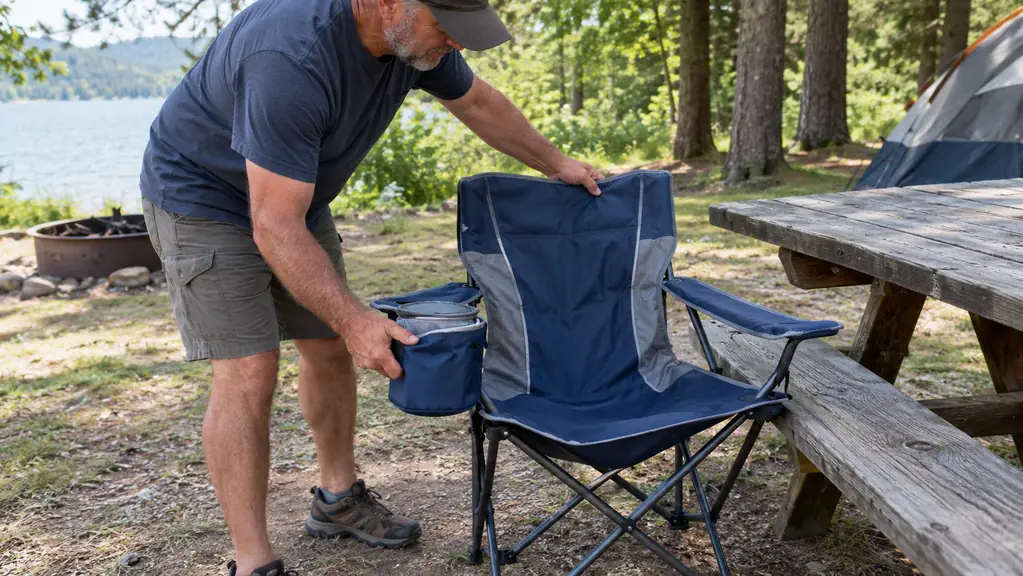
The Coleman Portable Camping Chair with 4-Can Cooler has a cushioned seat, a built-in cooler that holds four cans, a cup holder, and side pockets. It is the chair the adults fight over at our campsite, and it is the one I would start with if you are building a family set from scratch.
Amazon Check Today's Price on Amazon →Step 1: Match the chair to the person, not the price
The biggest mistake I see families make is buying one style of chair for everyone. A chair that works for a 200-pound adult is not automatically right for a 7-year-old, and a tiny kid chair is not right for Grandma when she visits. Before you look at any product page, make a list of who will actually sit in these chairs and how much weight each chair needs to hold. I made that mistake at Bear Lake State Park last June. I handed our 12-year-old a chair rated for 150 pounds because it was the spare, and by the second day the backrest was bent. The same chair would have been fine for the 7-year-old, but it was never going to survive a teenager flopping into it after swimming.
For adults, look for a weight rating of at least 250 pounds. That gives you a little margin for a person in a heavy coat at a fall campout, and it means the frame will survive a teenager flopping into it. For kids under about 10, a chair rated around 150 pounds is plenty, and the smaller seat depth means their feet actually reach the ground, which stops a lot of the rocking and tipping. I measured our campsite chairs one afternoon and wrote the weight limits on the backs with a marker; it took ten minutes and saved a whole season of arguments.
The Coleman chair with the 4-can cooler is rated for 250 pounds, which covers me, my wife Jenna, and most of our older kids. It is not a chair I would hand to a toddler, but it is the workhorse of the set. When you are picking chairs for the whole family, think of it as a lineup: a couple of sturdy adult chairs, a couple of mid-size chairs for the teenagers, and one or two small ones for the little kids. For our crew, that works out to three chairs rated for 250 pounds, two for 150, and one small one that the youngest uses until he outgrows it.
Step 2: Decide how much cooler space you actually need
Here is the question that separates a good family chair from a great one: where does the drink go? At our campsite, the answer is always the same. The kids are in and out of the tent, the fire pit, and the picnic table, and their cups end up on the ground, on a stump, or in the dirt. A chair with a built-in cup holder fixes that for the person sitting in it.
The Coleman chair goes further. It has a cooler built into one armrest that holds four cans, plus a cup holder on the other side. That means the person in the chair does not have to walk back to the big cooler every time they want a drink. On our August trip to Flaming Gorge, I refilled my cup maybe twice all evening instead of every ten minutes, because the cooler was right there in the armrest. That sounds small until you are the parent who is also watching the fire and the kids. For a parent who is trying to keep an eye on the fire and the kids at the same time, that is genuinely useful. It also keeps drinks out of the reach of the youngest kids, which is its own kind of peace of mind.
You do not need a cooler chair for every person. In our family, we have two chairs with coolers and the rest are simpler chairs. That is usually enough. The kids mostly drink from water bottles they carry around, and the adults are the ones who stay put long enough to use a built-in cooler. If you are buying a full set, start with one or two cooler chairs and fill in the rest with basic models.
Step 3: Check the carry weight and the bag
A camp chair only helps if it actually makes it from the car to the campsite. I have owned chairs that were comfortable to sit in and miserable to carry, with straps that dug into my shoulder and bags that split after one season. When you are moving five or six chairs from a Ford Expedition to a fire ring, carry weight matters a lot.
The Coleman chair with the cooler weighs a little more than a basic chair because of the cooler and the padding, but it comes with a carry bag and a shoulder strap. I can carry it in one hand with the bag over my shoulder while I haul a tote with the other. Our site at Wasatch Mountain State Park sits about 150 yards from the parking loop, and I have made that walk with chairs in both hands more times than I can count. A chair with a real shoulder strap makes that walk feel half as long. For the kids' chairs, I look for the lightest option that still has a real frame, because the kids are the ones who will be asked to carry their own.
A good test: if you would not want to walk 200 yards with the chair in its bag, do not buy it. You will always end up walking farther than you expect, especially when the campsite is at the far end of the parking loop. The carry bag should have a sturdy zipper and a strap long enough to go over a shoulder, not just a tiny handle.
Step 4: Look for features that survive real family use
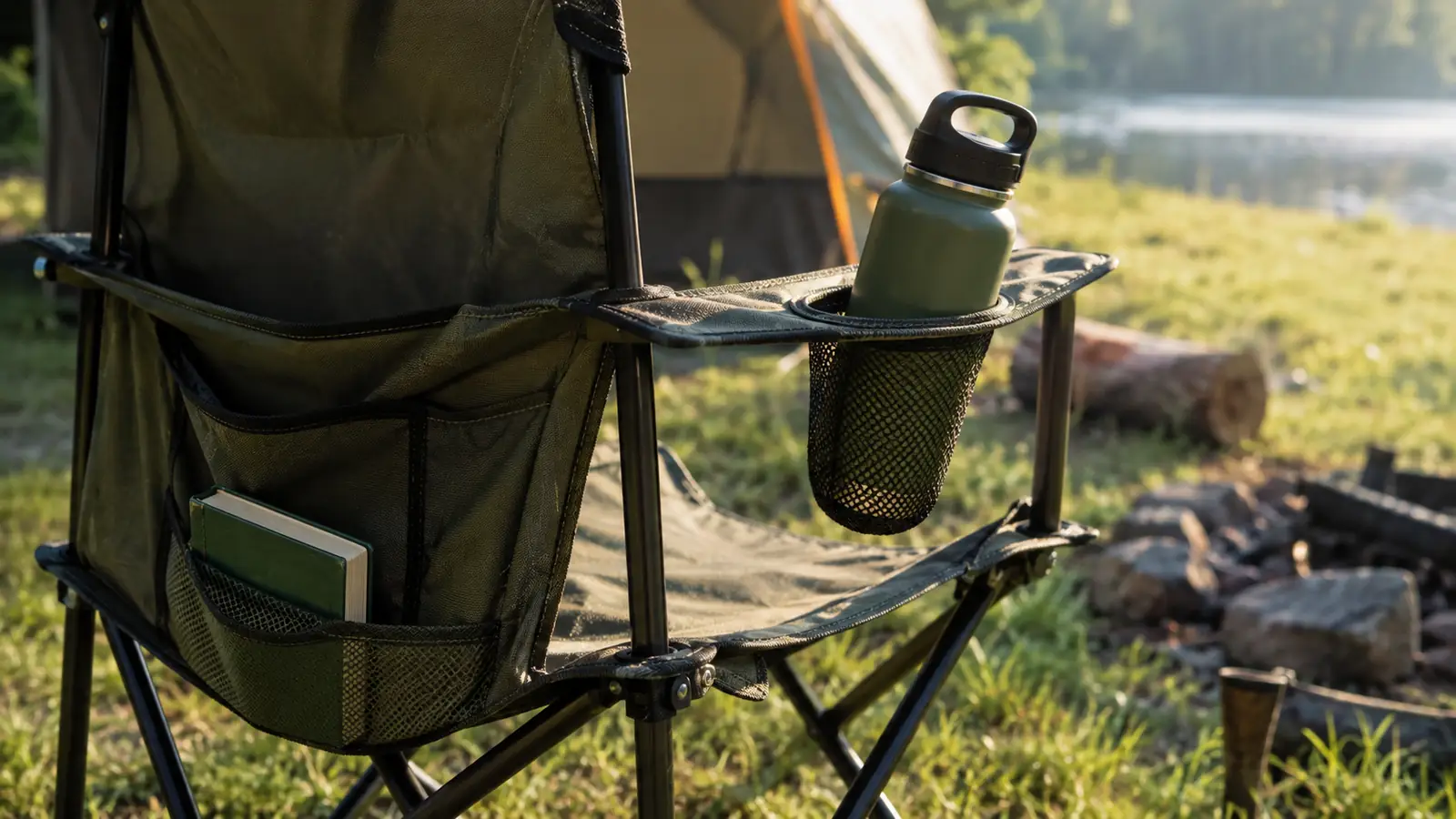
After a dozen summers, I can tell you which features on a camp chair are worth paying for and which are just marketing. A cup holder is worth paying for. Side pockets are worth paying for, because somebody always needs a place for a phone, a book, or a pair of kid sunglasses. A cushioned seat is worth paying for if you plan to sit for more than an hour, which at a campsite you always do.
The Coleman chair has all three: the cushioned seat and back, the side pockets, and the cup holder. The padding is the feature I notice most on the second day of a trip, when the novelty has worn off and I am just sitting by the fire for two hours. Last fall I sat in a friend's basic chair with no padding for one evening by the fire. It felt fine for the first twenty minutes and like a church pew by nine o'clock. The cushioned seat on the Coleman is the difference between sitting and perching. A chair that feels fine for ten minutes can feel very different after an evening of campfire conversation.
What I would skip: built-in footrests on chairs for kids, because they add weight and the kids rarely use them, and fabric that looks like it will stain. Camp chairs get dirty. Coffee spills, marshmallow goo happens, and muddy shoes end up on the seat. Look for fabric that wipes down and a frame that does not rattle after a season of being thrown into the back of an SUV.
Step 5: Plan for the kids, then plan for the guests
The last step is the one I forget every single year: count the people who will actually show up. We are a family of seven, but we almost always have a friend or a grandparent join us for at least one night. If I pack exactly seven chairs, somebody sits on the ground. I now pack one extra chair per trip, and it is usually the Coleman with the cooler, because it is the one an adult guest is happiest to be handed. My father-in-law joined us for three nights at Bear Lake last summer. I handed him the Coleman with the cooler, and by the second night he was asking what model it was. That is the best review a guest chair can get.
For the kids, I have learned to buy chairs that are slightly bigger than they need. A 6-year-old in a chair meant for a 10-year-old will grow into it, and a chair that is too small gets abandoned for a log or the tailgate. The teenagers, meanwhile, will sit in whatever the adults are sitting in, so if you want the good chairs to last, set a rule early about which chairs are for the adults and which are for everyone else.
And one more thing: bring a chair for the fire ring and a chair for the picnic table. We keep two Coleman chairs with coolers at the fire ring and let the kids use the simpler chairs at the table. That way the chairs with the padding and the drink holders are the ones that get used the most, and the basic chairs take the abuse.
What Else Helps
A few things make a family chair setup work better than any single chair can. A small folding side table gives everyone a place to set down a plate without using a chair armrest. A cheap outdoor rug under the chairs keeps the legs from sinking into soft ground and keeps the dust down. And a dedicated tote for chair bags means the kids can carry their own chairs without dragging them through the dirt. None of these cost much, and they all make the chairs last longer.
I would also suggest labeling the chairs. We use a piece of duct tape with a number on the back of each chair, one through seven. It sounds silly, but it stops the nightly argument about whose chair is whose, and it makes it easy to count chairs when we pack up in the dark. The Coleman chairs have a sturdy frame that takes tape fine and wipes clean at the end of the season.
The chair that has earned a permanent spot in our rotation is the Coleman with the 4-can cooler. It is the one the adults fight over, and the one I would buy first for any family campsite.
Start your family chair set with the one that does the most
The Coleman Portable Camping Chair with 4-Can Cooler handles the adult seats, the drink storage, and the guest chair all at once. It is the chair I would grab first, and the one that makes the rest of the set easier to fill in.
Amazon Check Today's Price on Amazon →